
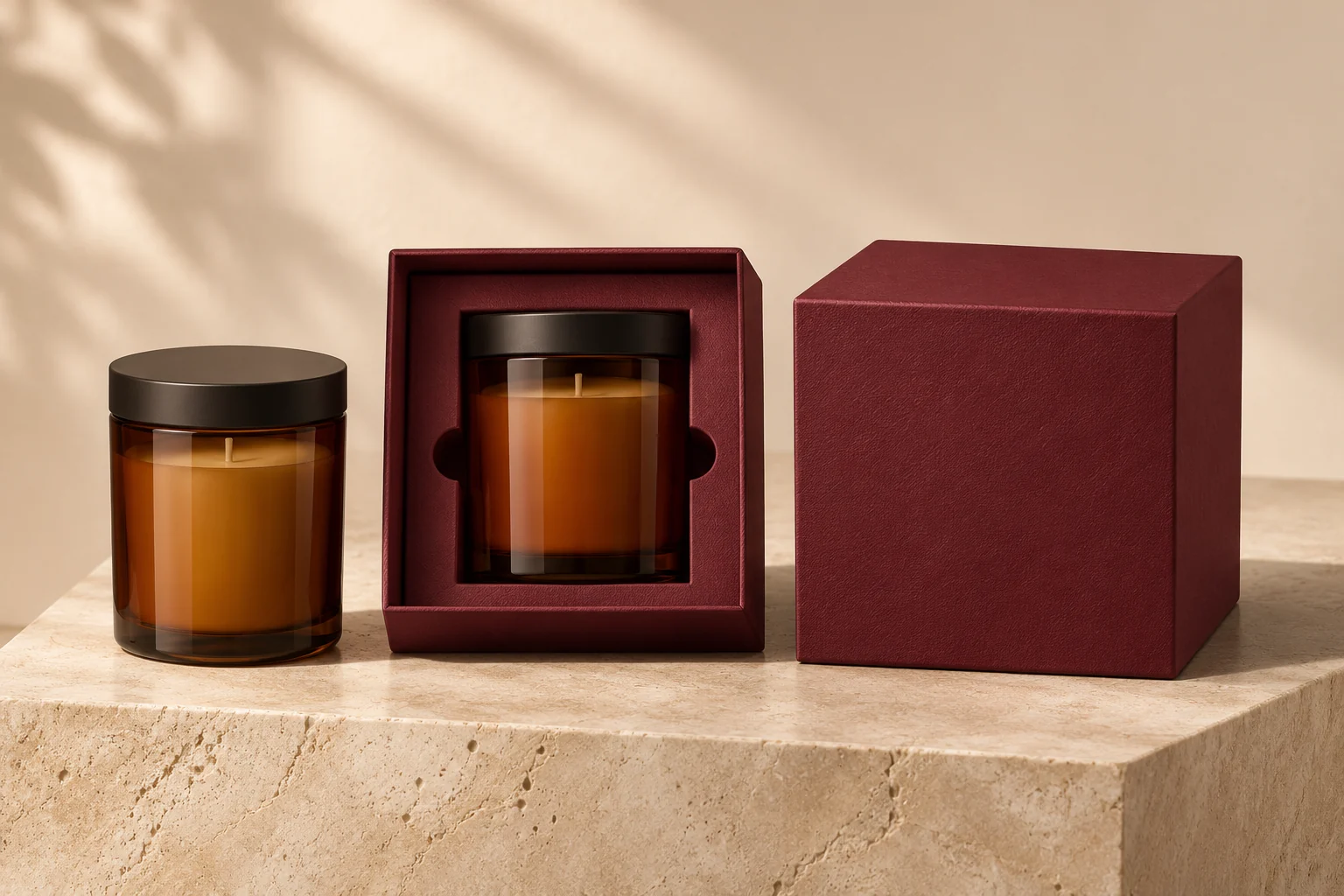
 AI DESIGN CONCEPT01 / SINGLE CANDLE
Rigid box for a single jar
Presentation, opening sequence and space around the jar.
Compare a single-candle outer box, a box with an insert, or a two-candle set. Start with your finished product, then define the structure, components and supply arrangement.
Start a packaging briefEmpty custom paper packaging · Production from 500 pieces · Sizes and artwork splits reviewed per project
The three AI concepts below illustrate a single-candle box, box with insert and two-candle set. They are not approved specifications, tested samples or customer projects.
AI DESIGN CONCEPT01 / SINGLE CANDLEPresentation, opening sequence and space around the jar.
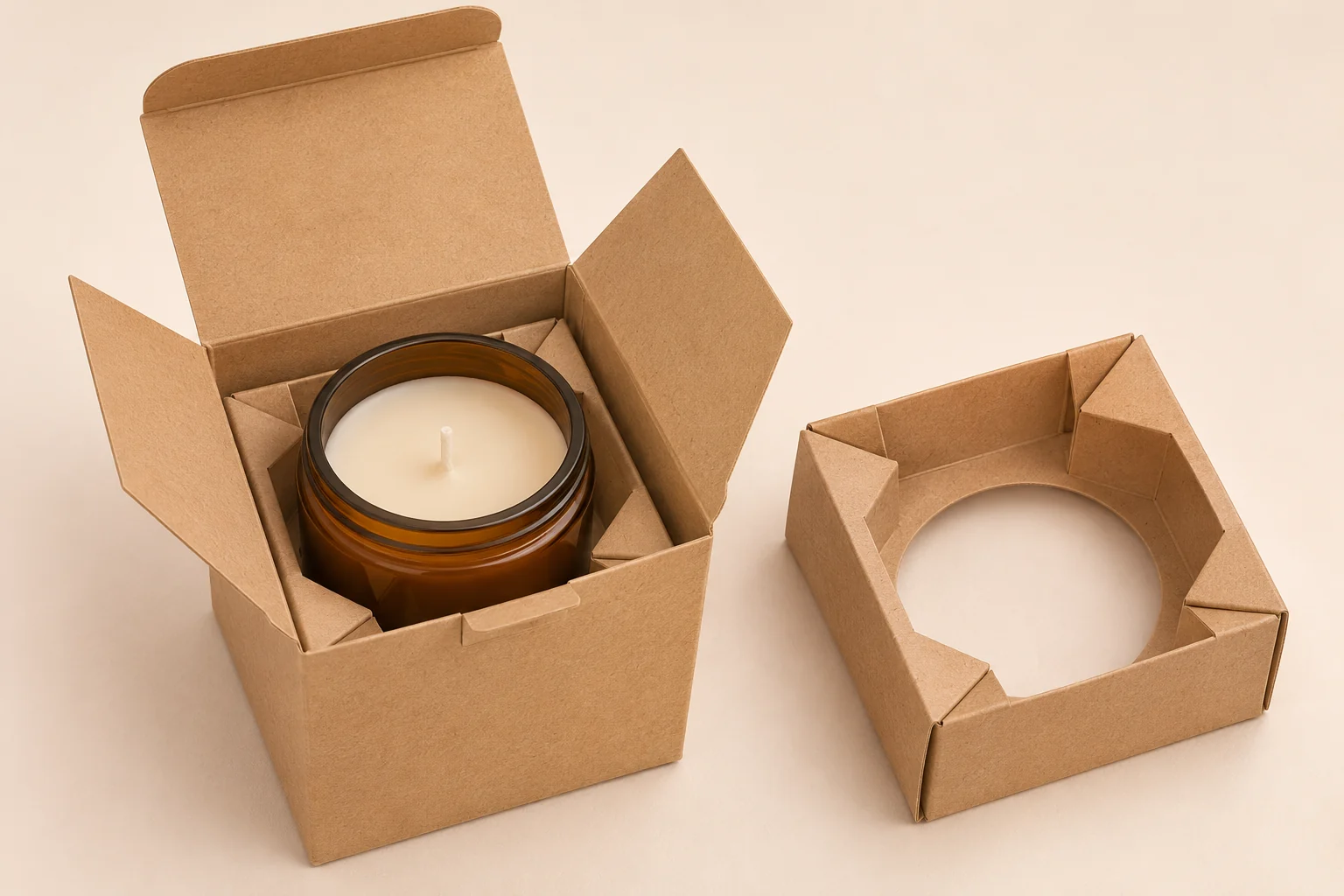 AI DESIGN CONCEPT02 / BOX + INSERT
Insert geometry, contact surfaces and packing access.
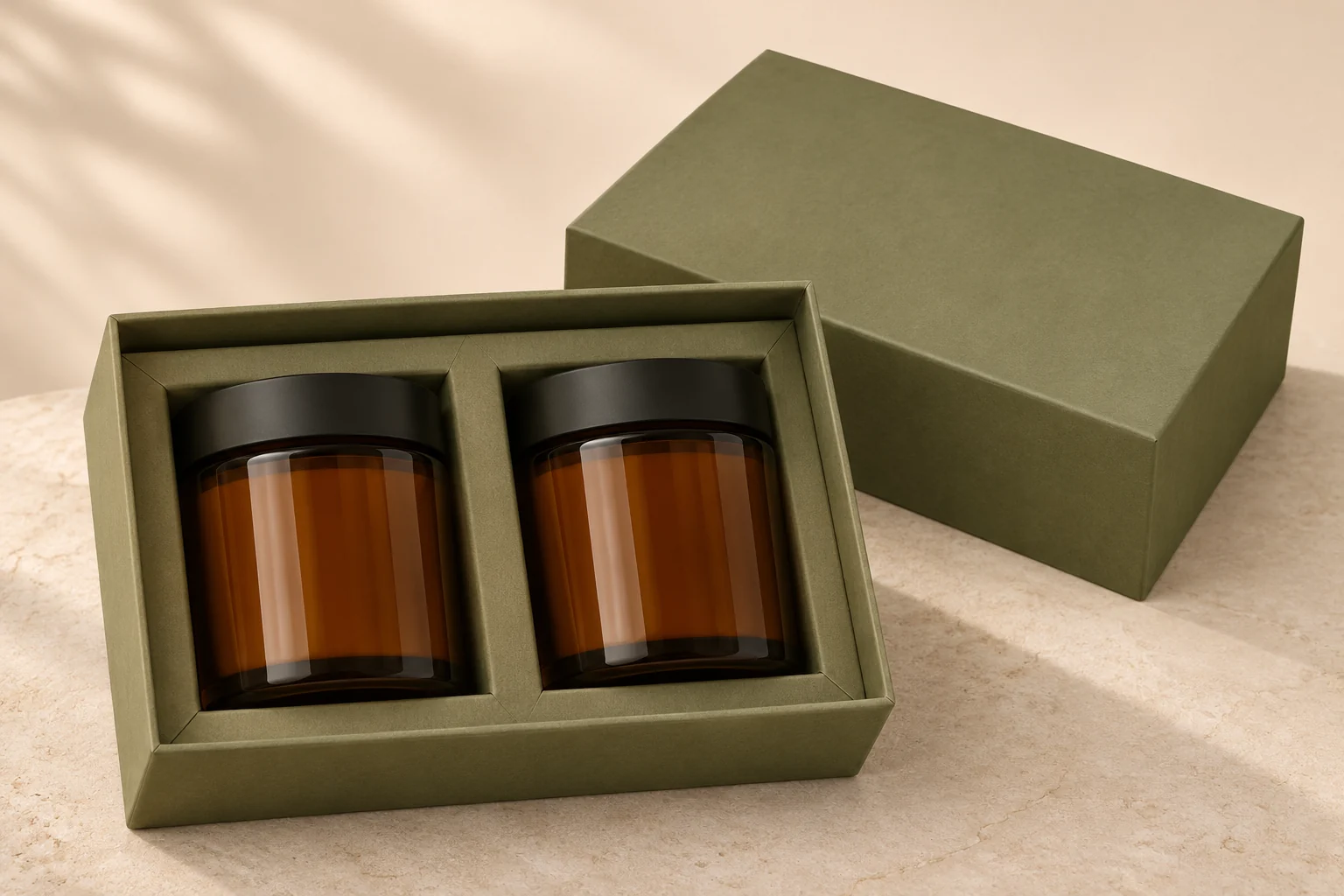 AI DESIGN CONCEPT03 / TWO-CANDLE SET
Two product references, separation and the complete set.
YDP manufactures these four box families in-house. Shortlist by the opening, components and supply arrangement you need. This is a decision guide, not a tested ranking of cost or protection.
A folding outer box for a single product or a set.
A defined lid, base or other opening format for the presentation you have in mind.
A cylindrical presentation direction, with the actual candle format identified first.
An outer shipping pack or mailer requirement in addition to the retail presentation.
A single-candle gift box and a multi-candle gift set are different layouts. Name the number of products and accessories; “gift packaging” does not define a two-candle set.
See the sourced paper-tube purchasing reference ↗Identify the construction, paper/material reference, print and finish, and whether the box is supplied flat or formed.
List the insert, divider, cards and accessories. Keep their drawings and versions linked to the box and the product reference.
Identify who assembles the pack and inserts the product, plus any outer carton, cushioning and destination requirement.
Compare the same scope before comparing a unit price. An insert shown in a photo is not automatically included in a box quotation.
These are scope descriptions, not fixed packages. Insert-only orders, component sourcing, assembly and candle-packing services require project review. Finished candles, glass jars, wax filling and fragrance are outside the default supply scope.
A useful review starts with the actual finished product: lid, label, filled weight and surfaces that need care.
Maximum finished dimensions, filled weight, lid and label details, photos or a drawing, and any sensitive surfaces. If something is unknown, identify it rather than estimate it from capacity.
Where the jar is supported, where it can move, contact with the lid or label, assembly steps, opening clearance and hand access when removing the candle.
Describe the symptom, when it occurs and the product/box/insert versions involved. Reference existing photos or drawings and explain what has changed; a new layout is not assumed to be the answer.
Presentation and transport requirements need separate consideration. A gift-box image or normal handling observation does not establish transport performance.
Record the finished product before choosing a box size. Use the actual lid and label, keep the product version identifiable, and leave unknown values open.
For a round product, record the maximum finished outside diameter. For a non-round product, record maximum width and depth. Include the lid, label and any projecting part; record the full closed height in millimetres.
Give the actual filled weight in grams for the referenced product. Note delicate labels, finishes and other surfaces that need care. If you only have an empty jar, identify it as empty rather than treating its weight as the finished weight.
Add the product or SKU reference, lid and label version, and a drawing or measurement photo where available. List different products separately; capacity alone does not establish that two jars have the same outside dimensions.
Product dimensions are inputs, not a finished box specification. Usable internal space, insert geometry and removal clearance need their own review; this guide provides no automatic box-size or clearance calculation.
Prepare the optional jar-and-version worksheet ↗Decide what the sample should check ↗Box construction, dimensions, components, artwork and finish, quantity splits, assembly and delivery conditions can change what is being quoted. Keep these references the same when comparing proposals.
| Quote line | What to identify | Check before comparing |
|---|---|---|
| Box and components | The quoted box, insert, dividers and accessories; quantity by size and artwork. | A box-only unit price is not a complete box-and-insert price. |
| Artwork, setup and tooling | Which work is included, needed separately or not part of the scope; the referenced artwork and construction. | Do not assume setup or tooling is included or charged without checking the quotation. |
| Samples and changes | Sample type, represented materials/finishes, substitutions, and any agreed change or repeat-work arrangement. | Keep sample costs and schedules distinct from production; no universal free-sample or refund rule is implied. |
| Assembly and packing | Flat or formed supply; who erects the box, fits the insert and packs the candle. | Identify who performs each operation before comparing the supply price. |
| Delivery and destination | Outer shipping packaging, transport, taxes, destination and the responsibility covered by the quotation. | Separate production completion, dispatch and arrival; record which date is requested. |
Ask each quotation to distinguish included work, separate charges and excluded items. These categories do not mean that every item is charged. Prices, payment terms, validity, sample arrangements and timing remain project-specific.
Review sample costs and confirmation inputs ↗Production starts at 500 pieces. Quantity splits across sizes, artwork and scents are confirmed for the specific project. If a value is unknown, identify it and start with your current brief.
Fees, tooling, assembly, shipping, taxes, payment terms and timing are confirmed in the project quotation. Sample costs and schedules are agreed separately.
Prepare my quotation request Understand the sample stage ↗No. Millilitres or ounces do not specify the maximum finished diameter, lid, label, height or filled weight. Reference the actual product or its drawing and identify what is still unknown.
Compare the box and components, artwork/setup or tooling where needed, samples and changes, assembly, and delivery scope. Identify included work, separate charges and exclusions against the same product, quantity and version. An insert pictured with a box is not automatically included in its quoted unit price.
The production minimum is 500 pieces, but mixed-size and mixed-artwork counting is project-specific. Supply the proposed quantity for each version so the commercial and technical scope can be confirmed.
No. Presentation, ordinary handling and transport are different requirements. A design image or opening demonstration is not a transport test or shipping-performance rating.
Start with the product reference, any known maximum dimensions and filled weight, intended use, approximate quantity and destination. Name the decision you need next; do not invent missing dimensions.
Yes. Reference the file name, version or earlier discussion and identify changes or missing information. The enquiry accepts an existing reference or restricted sharing link; the website does not fetch that link automatically.
Bring your specification, a direction to explore or a packaging problem. Quantities can still be undecided.
Production minimum: 500 pieces.
Mixed sizes and artwork are confirmed per project.